Tania Bezocheredeva
Doctor ZhivagoTania Bezocheredeva, known as Tania and cruelly nicknamed Tania Out-of-Turn, is a homeless girl whose life bears the literal consequences of Russia’s upheavals. A regimental laundry worker during the Second World War, she becomes a friend of Christina Orletsova and later tells Misha Gordon and Innokentii Dudorov a history of exile, orphanhood, and wandering. Her story turns a phrase about the children of Russia’s terrible years from metaphor into lived fact.
Identity and Background
Tania is introduced through the impressions of people who know her at the front. Christina Orletsova was her friend, and the two women had met there. Gordon notices that Tania’s smile recalls Yurii Andreievich Zhivago’s, even though her snub nose and high cheekbones initially shape his view of her appearance. He recognizes in her a familiar Russian type: an expression that, once noticed, changes how the face is seen.
Her surname, Bezocheredeva, sounds to Gordon like a barbarous nickname, and he wonders how she acquired it. Tania explains that she was a bezprizornaia, a child of unknown parents. He suggests that she may once have been called Bezotchcheia, meaning “Fatherless,” in a region where the language remained pure; city speakers then distorted the name, giving it an association shaped by more recent experience. The uncertain origin of her name carries the same history as her identity: an original condition of abandonment altered by the world through which she has passed.
Tania says she has heard that her mother, Raïsa Komarova, was the wife of a Russian cabinet minister, Comrade Komarov, who was hiding in White Mongolia. She doubts that he was her biological father. She has no certainty about the source of what she knows, admitting that it may have come from strangers or from some kind of memory. Her account is not a settled family record but the fragmentary knowledge of an orphan who has had to assemble her origins from what others said.
Friendship with Christina and War Service
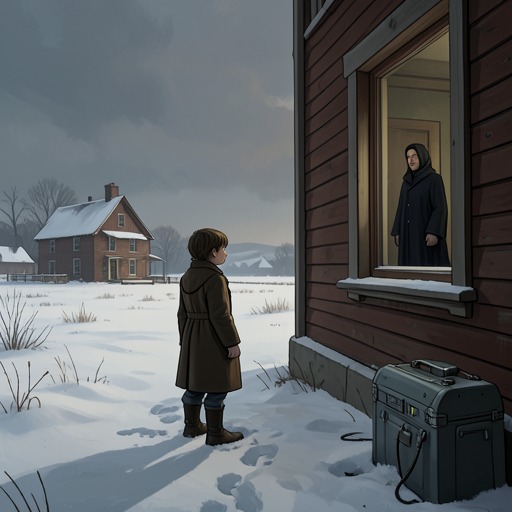
Tania works as a laundry girl with a military unit. When Gordon, Dudorov, and other members of their group wait for a truck, her regimental laundry sits packed in crates under her watch. The practical responsibility contrasts with the wandering life she recounts: in the present she is entrusted with the unit’s property, while her past has been marked by movement and insecurity.
Her friendship with Christina began at the front. Christina had been among a group of male and female undergraduates billeted in a Moscow suburb where her future fiancé’s unit was also stationed. In the summer of 1941, as civilian units were being formed and Christina was training as a parachutist, the first German bombers were spotted from Moscow rooftops and driven back. Christina and her fiancé became engaged, but his regiment was soon moved and they were separated; he never saw her again. Tania’s friendship with Christina gives her a personal connection to this lost relationship, and her testimony becomes part of the effort to find people who knew Christina personally.
Major-General Evgraf Andreievich Zhivago, passing through the area and asking for eyewitnesses who had known Christina, has Tania brought to him. She tells him what she knows of Christina. Though shy about her own background, she says he asked where she came from and urged her not to be embarrassed or ashamed. As she spoke, his nodding reassured her, and she continued with more of her story. He called it extraordinary and promised to find her again, saying he might put himself down as her uncle and send her to a university. Tania suspects he may have been joking, but the exchange briefly offers her the prospect of recognition and a future beyond itinerant hardship.
Flight and Childhood
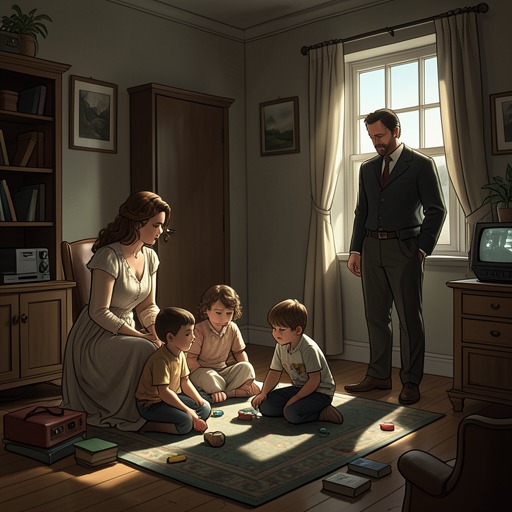
Tania’s account reaches back to a conflict in Siberia, beyond Krushitsy, near the Chinese border. When the Reds moved toward the Whites’ chief town, Komarov, her mother’s husband, arranged for her mother and other families to be sent away on a special train. Tania says her mother was frightened and would not move without him. Komarov did not know Tania existed: she had been born while her mother was separated from him, and her mother feared he would discover the child. Tania describes him as hating children and shouting that they brought filth and worry into the house.
Her mother’s fear and Komarov’s hostility leave Tania exposed to a household in which her existence is treated as something to conceal. When a railway official comes to take charge of government property and decide what should happen to Aunt Marfa, Tania is afraid to go back for her clothes. She asks to be taken with the people on the train, and they take her along. The departure is not a chosen journey toward a known home: it is an escape from the immediate danger and uncertainty of the house.
Afterward, Tania wanders across her own country and others with the homeless children. She recalls both the freedom she feels in the present and the sin and misery of her childhood, while acknowledging that much of what followed belongs to a story she has not yet told. Even the fate of Aunt Marfa remains uncertain in her account: some people say she never recovered and died in a madhouse; others say she recovered and came out. Tania’s history is therefore made up not only of displacement but also of unresolved endings and reports she cannot verify.
Recognition and Narrative Significance
Tania tells her story while waiting more than five hours for a truck, with the laundry crates nearby and the group gathered around her. The delayed lift gives her an audience and time to speak. The narrative moves from the present-day practical scene to an account of childhood terror, then returns to the men’s silence after hearing it. This structure allows Tania’s voice to interrupt the routine of military travel with the scale of a life shaped by war and abandonment.
Afterward, Gordon asks Dudorov whether he realizes who Tania is. Dudorov answers that he does. Their recognition confirms that her story has disclosed a consequential identity, though the passage does not specify what action will follow. Gordon says Evgraf will look after her, linking the general’s earlier promise to the listeners’ response. Tania’s life, which has carried her from an uncertain childhood through homelessness to wartime service, now draws the attention of people positioned to help.
Gordon places her story within a reflection on historical language. He contrasts the Russian Enlightenment with the Russian Revolution and invokes Alexander Blok’s phrase “We, the children of Russia’s terrible years.” As Gordon explains it, Blok used children and terror figuratively: the children were heirs and intellectual successors, and the terrors were apocalyptic forces sent from above. Tania’s account makes the metaphor literal. Children are children, and the terrors are terrible: her orphanhood, flight, and years of wandering supply the human experience that the abstract phrase can otherwise conceal.
Tania’s significance lies in this change of scale. Political upheaval appears not only as an ideological or military sequence but as a force that reaches into a child’s family, makes her existence a secret, and sends her away without even her clothes. Yet the woman who recounts that past is not reduced to victimhood: she maintains her work, speaks openly to strangers, and draws attention through the force of her accumulated experience. Her story brings the consequences of history into the present and makes the act of listening a form of recognition.